
Posture Correction for Desk Workers in Salisbury, MA: A Chiropractor's Complete Guide
Posture & Desk Work · Salisbury, MA
Posture Correction for Desk Workers in Salisbury, MA: A Chiropractor's Complete Guide
If you spend your day at a desk, you already know the feeling. The tight neck by mid-afternoon, the ache in your low back, the shoulders that creep up toward your ears. Sitting for hours pulls your body out of its natural alignment, and over time that strain turns into real pain.
This guide walks through why desk work wears down your posture, what you can do about it at home and at your workstation, and how chiropractic care addresses the underlying cause instead of patching the symptoms. It is written for people in Salisbury and across the North Shore who sit for a living and want to stop hurting because of it.

Why does good posture matter for desk workers?
Good posture is about more than sitting up straight for a photo. When your spine holds its natural curves, your muscles, joints, and nerves share the load the way they are meant to. When it does not, a few muscles end up doing the work of many, and that is where the aches start.
Poor posture has a way of compounding. It can lead to ongoing back and neck pain, tension headaches, lower energy, and trouble focusing through the afternoon. Correcting it does the opposite. Patients tell us they breathe easier, sleep better, and get through a full workday without that familiar 3 p.m. ache.
What causes poor posture and back pain in Salisbury desk workers?
Most desk-related pain comes down to time and position. Sitting in one spot for hours, often with a workstation that was never set up for your body, slowly tightens some muscles and weakens others. The longer the day, the more that imbalance builds.
A few everyday habits make it worse: leaning toward the monitor, cradling a phone against your shoulder, and skipping breaks for hours at a stretch. None of these feel like a big deal in the moment. Repeated five days a week for years, they add up to a body that no longer holds its alignment on its own.
How does prolonged sitting affect spinal alignment?
Long stretches of sitting tend to tilt the pelvis and flatten the natural curve of the low back. Your head drifts forward over your screen, which loads the neck and upper back. That forward-head position alone can put several extra pounds of strain on the muscles that hold your head up. Over months and years, the spine adapts to those positions, and the discs and joints take more pressure than they were built for.
Which problems are most common among desk workers?
- Low back pain from long hours of sitting with little support.
- Neck pain from a forward-head, eyes-down screen position.
- Shoulder and upper-back tension from rounded shoulders and steady keyboard work.
- Tension headaches that start at the base of the skull and creep forward.
These are some of the conditions we work with most often, and they respond well when you address the root cause rather than chase the symptom.
How do chiropractors correct desk-worker posture?
Correcting posture is not a single technique. It is a combination of hands-on care, targeted therapy, and the right movement, matched to what your exam and imaging actually show. Here is what that work looks like.
Chiropractic adjustments
Adjustments restore motion to joints that have stiffened into a poor position. When the spine moves the way it should, the muscles around it can relax and the nerves get room to work. For desk workers, this often means real relief from the neck and low-back tension that builds up over a week of sitting.
Muscle tension relief
Hours at a keyboard leave the neck, shoulders, and upper back locked up. Soft tissue work releases that tension so you can move freely again. It also helps the adjustments hold, because relaxed muscles are less likely to pull your spine back into the old pattern.
Core and postural strengthening
A strong, balanced core is what keeps good posture in place once you have it. We build a take-home routine using proven systems such as McKenzie and McGill methods, so the muscles that support your spine get stronger over time. That is how short-term relief turns into a lasting correction.
How does spinal decompression ease desk-worker pain?
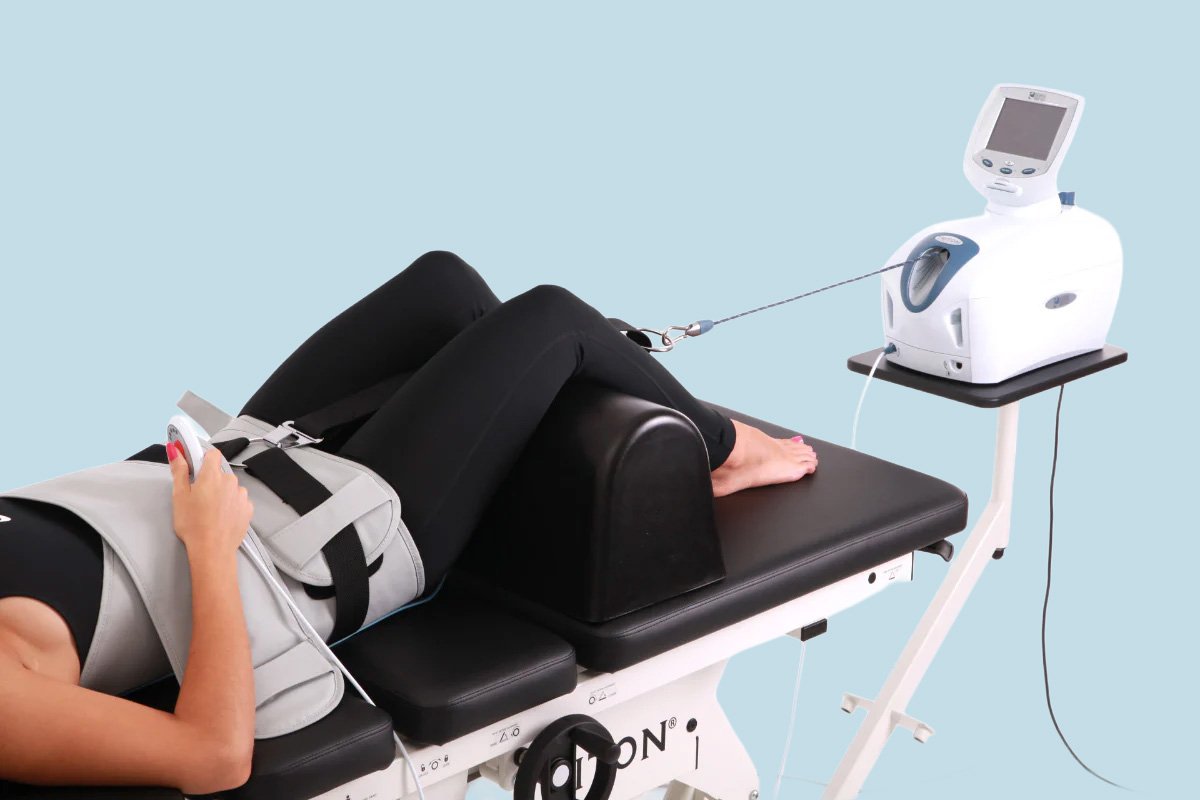
For desk workers dealing with disc-related pain, spinal decompression is one of the most effective tools we offer. It does not stretch the spine. Using the computer-controlled Triton DTS system, it gently unloads one targeted joint at a time and creates negative pressure inside the disc. That takes pressure off the disc and the nearby nerves, which is where a lot of sitting-related pain comes from.
Many patients feel noticeably better and move more easily as care progresses. Decompression is non-surgical and drug-free, which makes it a strong fit for people who want to correct the problem without going under the knife.
What do Class IV laser and focused shockwave add?
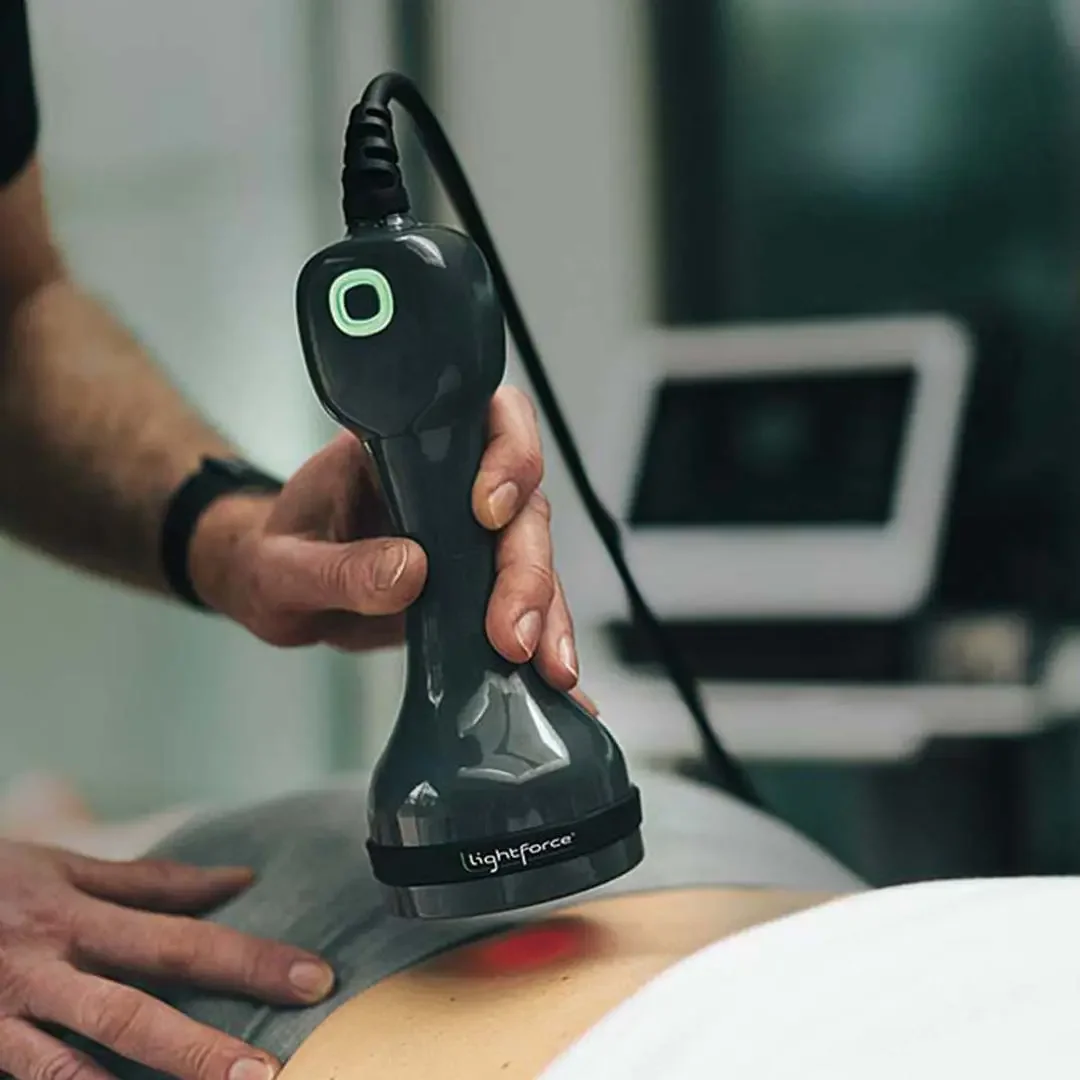
These two therapies speed up healing alongside the rest of your care. Our Class IV laser is Medical Grade, the only therapeutic laser powerful enough to reach the deep tissue and disc of the spine. It calms inflammation and helps tissue recover. Focused Shockwave is powerful and deep, the kind used in professional sports rehab rooms, and it targets a specific structure to kick-start repair in stubborn, long-standing problem areas.
Newman Chiropractic is the only practice on the North Shore that brings decompression, Class IV laser, and focused shockwave together under one roof, so your whole course of care happens in one place.
How can desk workers prevent poor posture?
Care in the clinic works best when it is paired with better habits at your desk. A few small changes protect the progress you make and keep new strain from building up.
Set up an ergonomic workstation
Start with the basics: a chair that supports your low back, a desk at the right height, and a monitor at eye level so you are not looking down all day. Your forearms should rest roughly parallel to the floor. A workstation that fits your body takes a surprising amount of load off your spine.
Take regular movement breaks
Aim to stand, stretch, or walk for a couple of minutes every hour. Movement gets blood flowing, loosens tight muscles, and resets your posture before strain sets in. A simple timer or calendar reminder is enough to build the habit.
Build posture awareness
Check in with yourself through the day. Back tall, shoulders down and relaxed, head stacked over your spine instead of jutting toward the screen. Quick resets like chin tucks and shoulder rolls go a long way when you do them often.
Which exercises and stretches help the most?
A short daily routine does more for your posture than the occasional long session. We tailor the specifics to each patient, but these are reliable starting points for desk workers.
- Planks to build the core that stabilizes your spine.
- Shoulder blade squeezes to strengthen the upper back and pull shoulders out of that rounded position.
- Hip flexor stretches to loosen the tightness that hours of sitting create.
- Neck stretches and cat-cow to keep the neck and spine moving freely.
- Seated hamstring stretch to counter tight hamstrings from a full day in the chair.
The goal is balance: stretch what sitting tightens, strengthen what sitting weakens. Done consistently, this is what keeps a corrected posture from slipping back.
How do chiropractic care and ergonomics work together?
The fastest, longest-lasting results come from doing both at once. In-clinic care corrects the alignment and relieves the strain. The ergonomic changes and home exercises keep the problem from coming back the moment you sit down at work again. One without the other tends to stall. Together, they hold.
That is the difference between patchwork care, sometimes called relief care, and chiropractic care. Patchwork care eases today's ache and waits for the next one. Correction looks at why it keeps happening and changes it, like correcting what caused a flat tire instead of just patching it again.
What does measurable posture progress look like at Newman Chiropractic?
You should not have to guess whether your posture is improving. We track it with the Spinal Health Score, a measurable progress metric that combines range of motion, x-rays, orthopedic testing, posture, and functional movement. We update it monthly during chiropractic care, so you can see your body changing, not just feel it. No other practice on the North Shore measures progress this way.
"I could stand up straight for the first time in a month." Newman Chiropractic patient
Why choose Newman Chiropractic for desk-worker posture?
Newman Chiropractic was built for people who have tried everything and still hurt. Dr. Jeff Newman grew up in Salisbury and has spent over 15 years turning the practice into a chiropractic clinic where every patient's care is built around measurement and tracked progress. Behind every patient's care is a clinical team reviewing your progress together, not one provider working in isolation.
Your care starts with a consultation and assessment with the doctor. You sit down, share your story, and get a thorough exam. We study your imaging and findings, then walk you through exactly what is going on, what it would take to correct it, . No pressure.
Rated 5.0 stars across 150+ Google reviews.
The only North Shore practice with decompression, Class IV laser, and focused shockwave under one roof.
Where can you find posture correction near you in Salisbury?
Newman Chiropractic is at 175 Elm St, Suite 4, Salisbury, MA 01952, serving desk workers across Salisbury, Newburyport, Amesbury, Seabrook, Hampton, and the wider North Shore and Seacoast. If posture and desk pain are wearing you down, contact our Salisbury office and we can help you understand what is happening and what it would take to correct it.
See your progress, month after month.
Book your New Patient Special. You will know what is going on, whether we can help, and what it would take to correct it.
Book New Patient Special Call (978) 961-9099