
How long does a sciatica flare-up last? And how to calm one down
Sciatica · Salisbury, MA
How Long Does a Sciatica Flare-Up Last? And How to Calm One Down
When sciatica hits, the first thing you want to know is when it will stop. The honest answer is that it depends on what is causing it, and that range is wide. Some flare-ups quiet down in a few days. Others hang on for weeks and keep coming back.
What follows is a straight look at the timeline, what actually helps while you are in it, what makes it worse, and the specific symptoms that mean you should be seen right away rather than waiting it out.
How long does a sciatica flare-up last?
Most people start to feel meaningful improvement within about four to six weeks. That is the general pattern, though where you land inside it depends almost entirely on what is pressing on the nerve.
| Type of flare-up | Typical duration |
|---|---|
| Mild, often from muscle tension or a single strain | A few days to two weeks |
| Moderate, usually involving disc irritation | Two to six weeks |
| Recurring or long-standing | Months, often in cycles |
The pattern worth paying attention to is not the length of any single episode. It is whether episodes keep returning. A flare that resolves and never comes back is a different situation from one that shows up every few months, and the second one usually means something structural has not been addressed.
Why does sciatica keep coming back?
Because feeling better and being fixed are not the same thing.
Sciatica is a symptom rather than a diagnosis. It describes pain traveling along the sciatic nerve, and something has to be irritating that nerve to produce it. Most often that something is a herniated or bulging disc pressing on a nerve root in the lower back. It can also be narrowing of the spinal canal, arthritic changes crowding the nerve, or a joint that has stopped moving properly and shifted load onto tissue that cannot handle it.
When a flare settles down, the inflammation around the nerve has usually calmed. That is real relief and it feels like recovery. But if the disc is still bulging and the mechanics that caused it have not changed, the setup for the next flare is still sitting there. Then you sit through a long drive, or sneeze wrong, or lift something awkwardly, and it starts again.
This is why some people cycle through the same episode for years while others resolve it once. The difference is rarely how severe the first flare was.
What helps during a sciatica flare-up?
A few things reliably make a difference while you are in the middle of one.
Keep moving, but modify
Bed rest was standard advice for a long time and it turned out to make things worse. Prolonged lying down stiffens everything and slows recovery. Gentle walking, even short and frequent, tends to help more than resting through it. What you want to avoid is the specific movement that reproduces your pain, not movement in general.
Watch how long you sit
Sitting puts more pressure on lumbar discs than standing does, which is why sciatica so often feels worst at a desk or partway through a drive. Get up every twenty or thirty minutes. It sounds minor and it is one of the more effective things you can do.
Fix your sitting setup
Keep your feet flat on the floor with your hips level with or slightly above your knees. Support your lower back so it holds its natural inward curve rather than rounding backward. Crossing your legs or slouching into a soft couch both load the nerve further.
Sleep in a position that unloads the nerve
Side sleepers do best with a pillow between the knees, which stops the top leg from rotating the pelvis and pulling on the lower back overnight. If you sleep on your back, a pillow under the knees does something similar. Stomach sleeping is the one to avoid, since it flattens the lumbar curve and turns your neck for hours.
Use cold and heat for what each does
Cold helps most in the first day or two when inflammation is at its peak. After that, heat usually feels better because it relaxes the muscle guarding that builds up around an irritated nerve. Neither fixes the cause, but both make the days more manageable.
When should you get sciatica checked out?
Some symptoms need attention right away.
Go to an emergency room now if you lose control of your bladder or bowels, feel numbness through the groin or inner thighs, or develop sudden weakness in both legs. These can signal cauda equina syndrome, a surgical emergency where waiting causes permanent nerve damage.
Get evaluated soon if you have weakness in the foot or leg that is getting worse, a foot that catches or drags when you walk, pain following a significant fall or accident, or a flare that has not budged after several weeks.
Short of those, the reasonable trigger for getting looked at is recurrence. One flare-up that clears and stays gone may not need much. Flares that keep returning are telling you something has not been corrected, and that is worth identifying while it is still correctable.
What does sciatica treatment actually involve?
Effective care has to do two separate jobs. Settle the current flare, and address whatever keeps producing them. Skipping the second part is why so many people end up managing sciatica for years.
At our Salisbury clinic, sciatica care typically draws on:
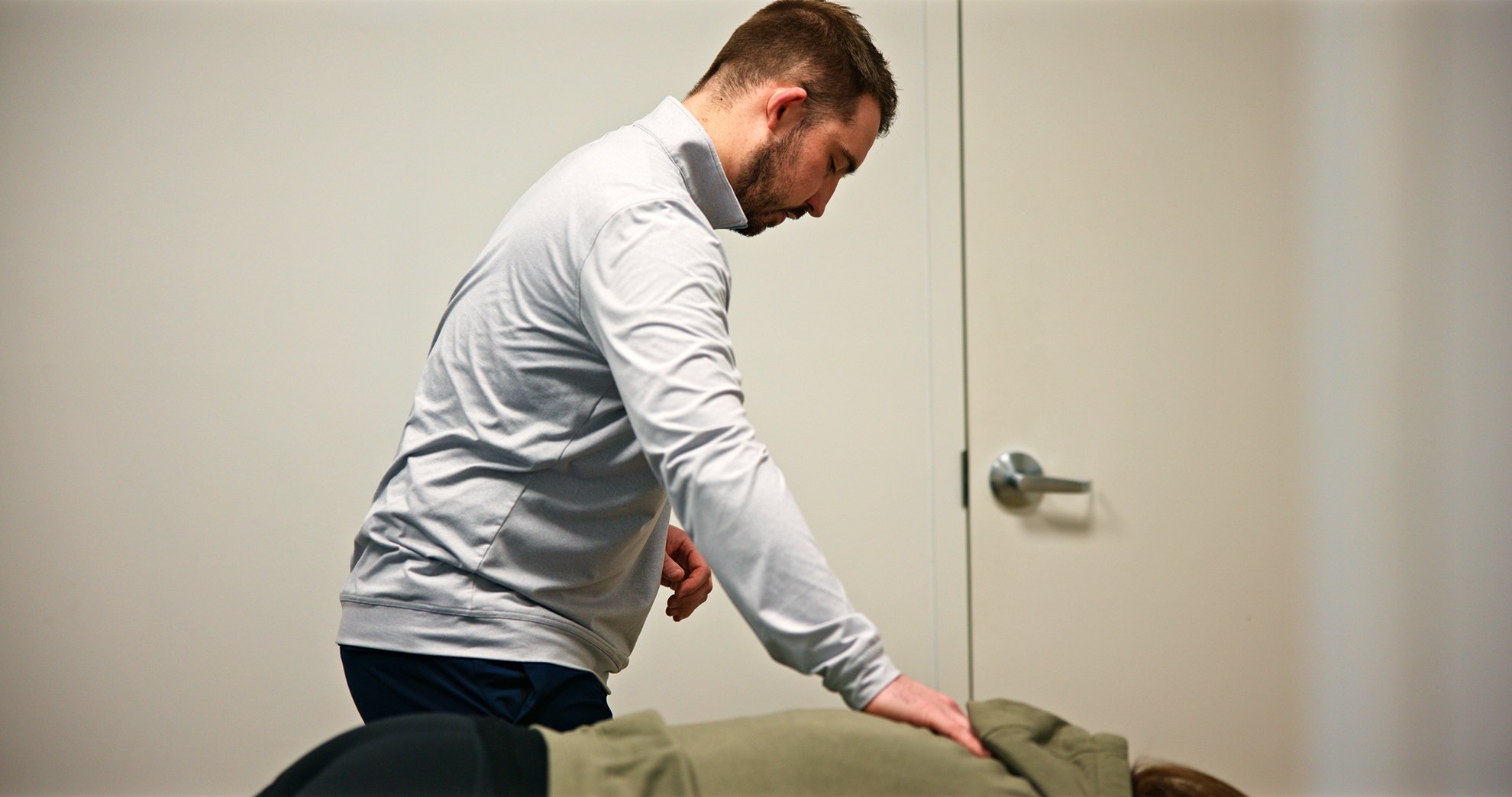
- Chiropractic Care to restore motion to joints that have locked up, so load spreads across the region instead of concentrating on one irritated level.
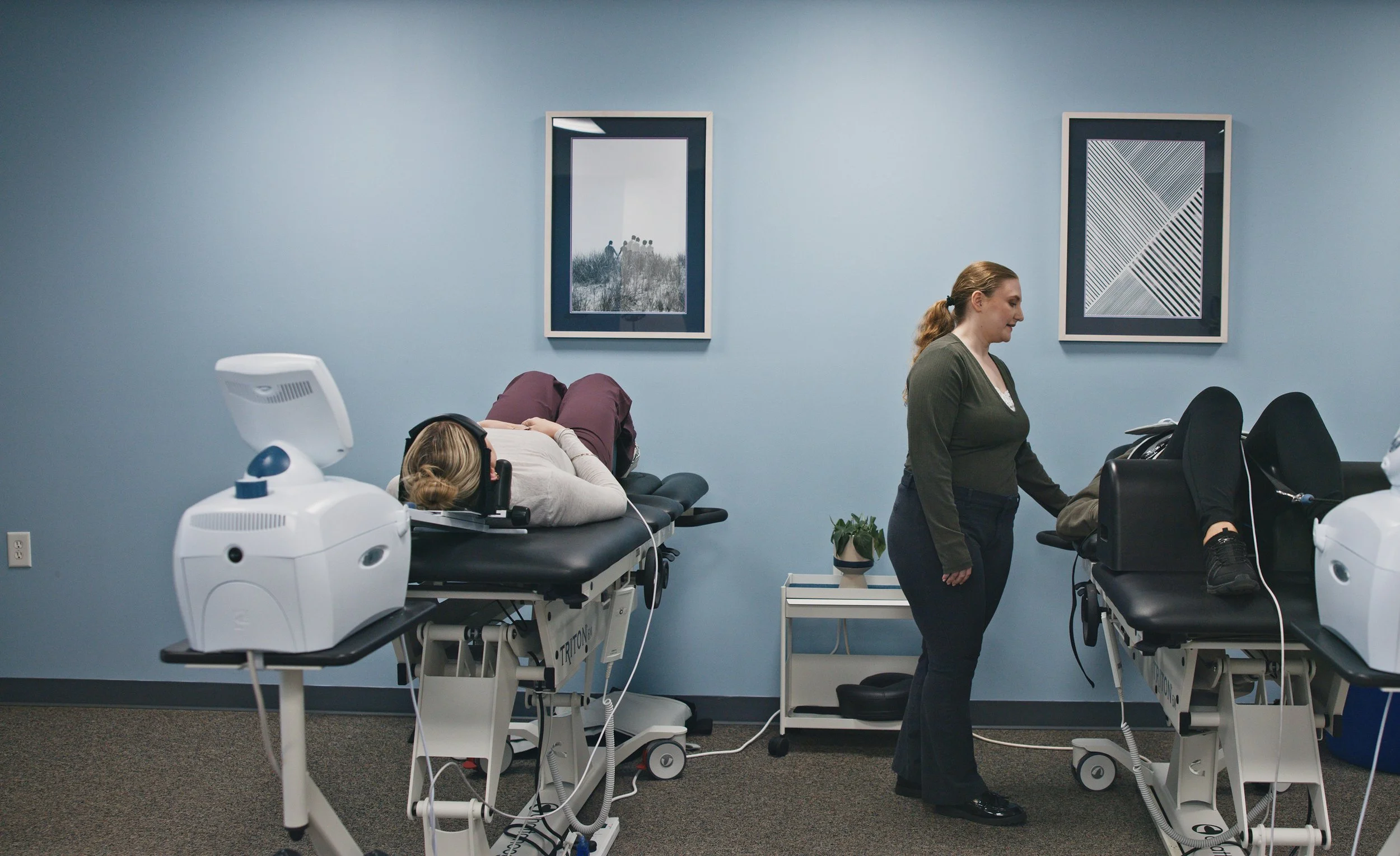
- Spinal decompression for disc-related cases, using gentle controlled traction to lower pressure inside the disc and ease what is pressing on the nerve.
- Class IV Medical Grade Laser to reduce inflammation in the deeper tissue around the nerve root.
- Focused Shockwave for long-standing cases where soft tissue has stopped responding to standard care.
Which of these you receive depends on what the examination finds. Not everyone needs all of them, and sciatica from a disc needs something different than sciatica from joint restriction.
What happens at your first visit?
Your first visit is a consultation and assessment with the doctor.
The first is examination. Motion X-rays, posture screening, range of motion testing, and neurological and functional movement assessment. Sciatica has several possible causes and they call for different approaches, so the point of this visit is finding out which one you actually have.
Then comes the conversation. What we found, whether we think we can help, and what a realistic path looks like. If your situation is better served somewhere else, we will tell you that.
Progress gets tracked with a Spinal Health Score covering posture, nerve function, and range of motion. Recovery is not linear and some weeks feel worse than others. Having measurements means a rough week reads as a rough week rather than as failure.
At Newman Chiropractic your care is built around your clinical picture and your goal rather than around what a benefits schedule will authorize.

The short version
Most sciatica flare-ups improve within about four to six weeks. Staying gently active, breaking up long stretches of sitting, and sleeping in a position that unloads the nerve all help while you are in one. If flares keep returning, that is the signal that something structural is still there. And a small set of symptoms, particularly anything involving bladder or bowel changes, needs emergency care immediately.
Get answers about your sciatica
We see patients from Salisbury, Newburyport, Amesbury, and across the North Shore. If sciatica keeps interrupting your work, your sleep, or the things you actually want to be doing, the evaluation is where you find out why.
You can also call or text the clinic at (978) 961-9099.
For more on how we approach nerve pain, see our sciatica treatment page or browse the full range of conditions we work with.
