
Focused Shockwave · Salisbury, MA
Does Shockwave Therapy Hurt? What a Focused Shockwave Session Is Really Like
The name does not help. Nobody hears "shockwave" and pictures something gentle. On the pain question, it sits around a three or four out of ten while the device is running, it lasts five to ten minutes, and most patients are talking through it by the second session.
Here is what the session actually involves, why it feels the way it does, and who tends to find it more uncomfortable than average.
What does focused shockwave therapy feel like?
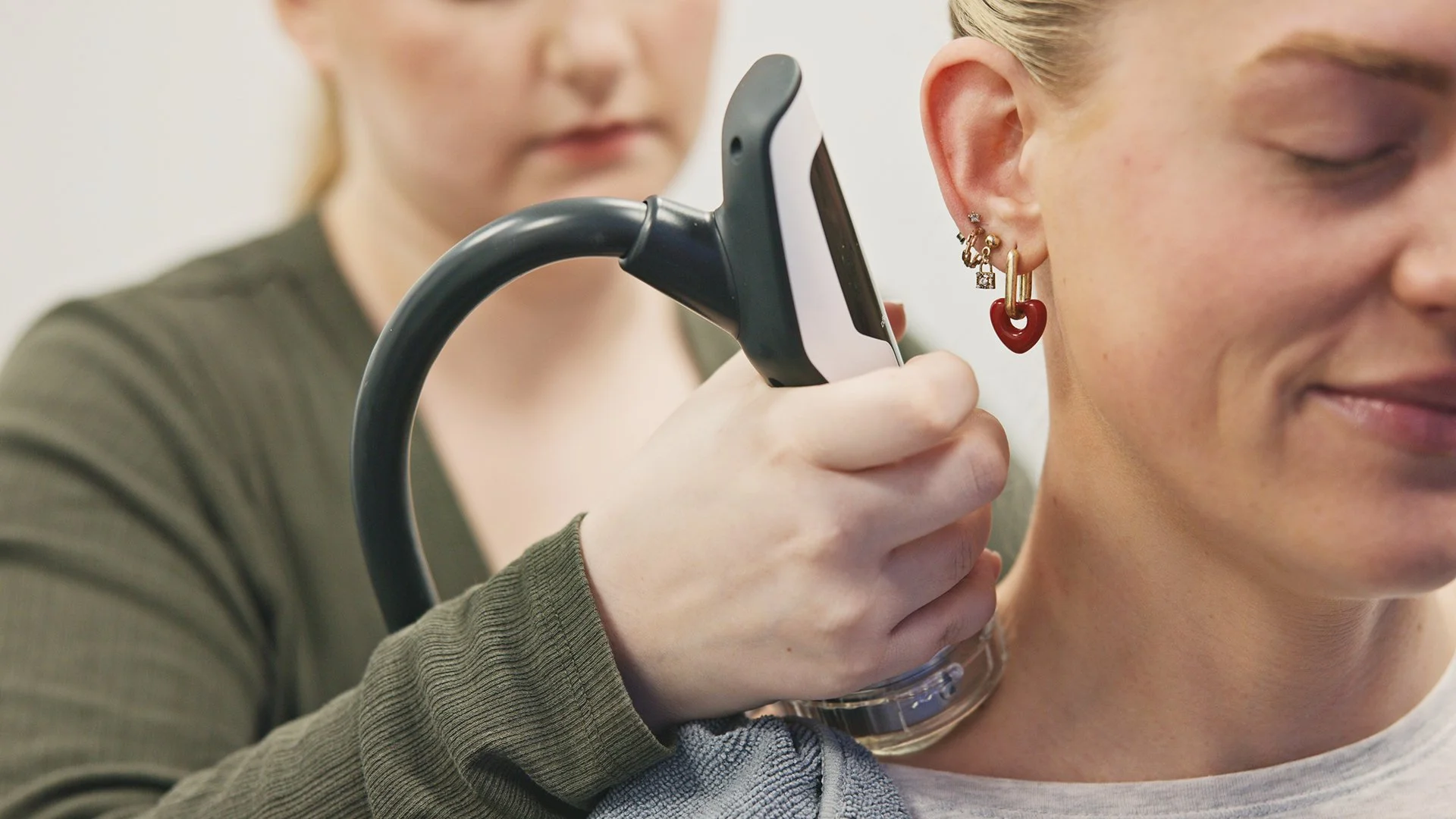
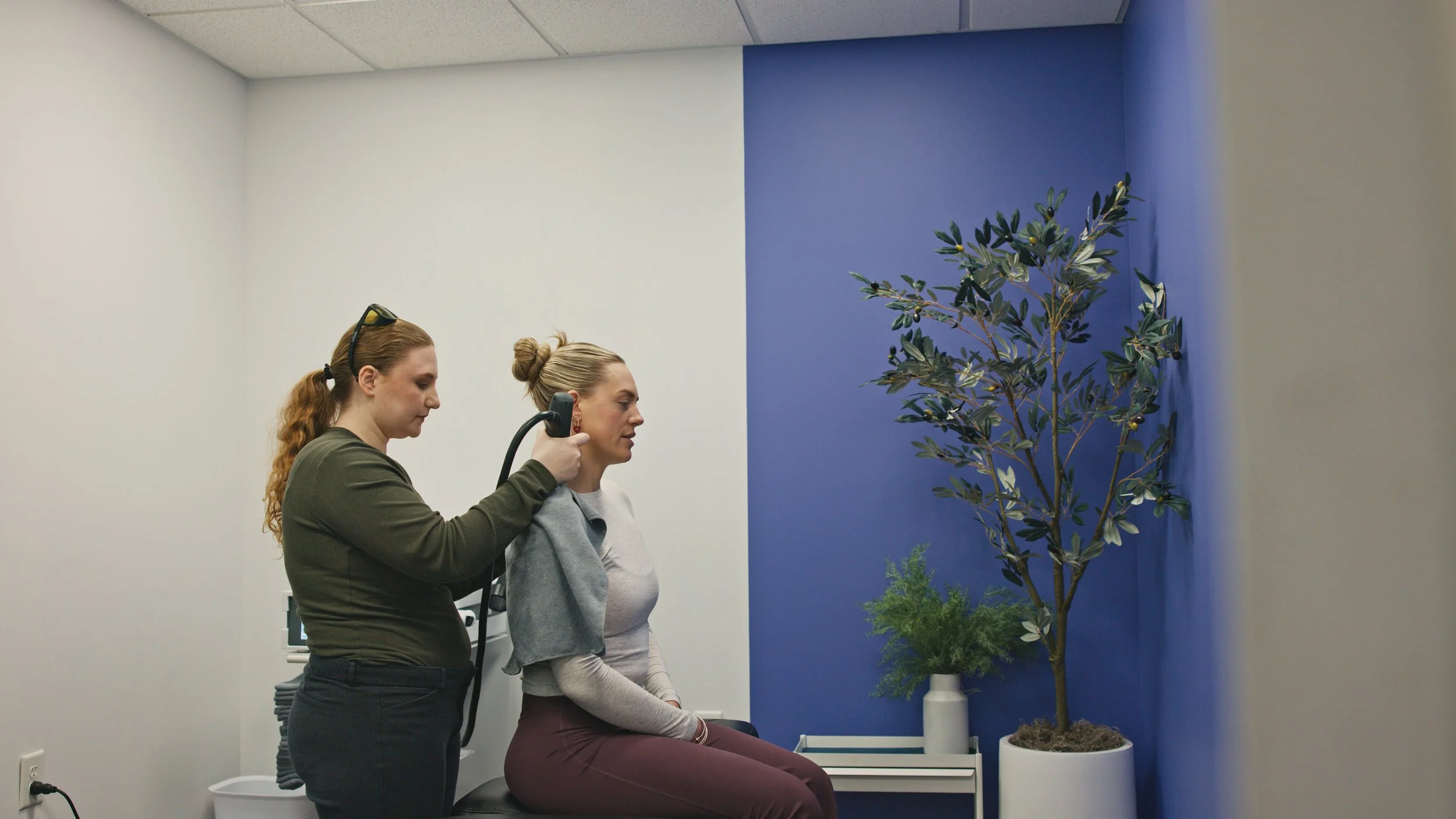
You sit or lie down, the area gets a layer of gel, and a handpiece is placed on the skin over the target. Then it delivers pulses. Most people describe it as a deep, rapid tapping, with some warmth building in the area as it goes.
The intensity is not fixed. It gets dialed to what the tissue needs and what you can tolerate, and it goes up or down while you are on the table. Three or four out of ten is the level we are aiming for. Sharp pain is not the target, and if you are at a seven, say so and we turn it down.
One thing patients often mention afterward: the spot that hurts the most under the device is usually the spot that was the problem. It tends to find the tender tissue rather than the area you assumed was the issue.
How long does a shockwave session take?
Five to ten minutes per region, with roughly 1,000 pulses delivered to each area being treated. If two regions are being worked on, you are still looking at a short appointment.
Sessions run once a week. That spacing is deliberate rather than a scheduling convenience. The treatment works by provoking a healing response in the tissue, and the tissue needs the week to respond and recover before the next round. Stacking sessions closer together does not speed anything up.
A standard course is eight sessions over about two months. Your case may need a different number, and that gets decided from your examination rather than from a package.
Why does it hurt at all?
Because the point is to get energy into tissue that has stopped healing properly.
Chronic tendon problems tend to stall. The body treats the area as settled, blood supply to the region is limited to begin with, and the repair process quietly stops partway. Focused shockwave interrupts that. The acoustic pulses create a mechanical stimulus at depth, which increases local blood flow and restarts the repair signalling in tissue that had gone quiet.
The discomfort you feel is that stimulus doing its job. It is not damage, and it is not the same thing as pushing through an injury.
What is the difference between focused and radial shockwave?
This matters more than most people realise, and the two are often sold under the same name.
Radial devices spread energy outward from the surface. Broad, shallow, useful for superficial tissue. Focused shockwave concentrates energy at a set depth, so the pulse passes through what is above and delivers at the structure being targeted.
We use focused. Powerful and deep, the kind of unit used in professional sports rehab rooms. If your problem is a tendon insertion sitting well below the skin, depth is the whole question.
Worth asking anywhere you go. If a clinic offers "shockwave," ask whether the device is focused or radial, and what depth it reaches. The answer changes what the treatment can realistically do for a deep structure.
How will I feel afterward?
Most people feel looser straight away and go back to their day. There is no downtime and no recovery period built in.
Mild soreness in the treated area over the next day or two is common and expected. It usually feels like the ache after a hard session at the gym. Some patients notice a short window where the area feels slightly more sensitive before it improves, which is normal in the first week or two of a course.
Worth asking whether to hold anti-inflammatories around your sessions. The inflammatory response is part of what the treatment is trying to trigger, so it is a reasonable question to raise with whoever prescribes or recommends what you take. That conversation belongs with them, not with us.
Who finds it more uncomfortable than average?
- Very irritated tissue. An area that is highly sensitive to begin with will register the pulses more sharply. Intensity gets started lower for those cases.
- Bony areas. Treating over a spot with little tissue between skin and bone, like the outside of an elbow, is felt more than a treatment through a thicker muscle.
- First-timers. The first session is almost always the least comfortable one, largely because you do not know what is coming. It gets easier once you do.
Shockwave is not appropriate for everyone. Active infection in the area, certain blood clotting conditions and blood thinning medication, pregnancy, and some tumours all rule it out. That is part of what the examination is checking for before anything gets recommended.
What does shockwave get used for here?
Stubborn soft tissue problems, mostly. Tendon pain that has hung around for months, plantar fascia pain, tennis and golfer's elbow, shoulder tendon issues, hip and glute tendon pain, and chronic areas that have not responded to rest or stretching.
It often runs alongside other things rather than on its own. Where a disc is driving the problem, non-surgical spinal decompression is usually the main tool. Where the tissue needs help healing at depth, Class IV laser therapy and shockwave pair well. What goes in your care depends on what the examination finds, not on what equipment we happen to own.
The short version
Focused shockwave is uncomfortable rather than painful, around three or four out of ten, for five to ten minutes per region. Roughly 1,000 pulses per area, once a week, usually eight sessions over about two months. Mild soreness afterward is normal. Intensity is adjustable throughout, so tell whoever is running the session where you are on the scale.
Find out if it fits your case
The New Patient Special is a consultation and assessment with the doctor. You leave knowing what we found and whether we can help. We see patients from Salisbury, Newburyport, Amesbury, Seabrook and across the North Shore.
Or call or text the clinic at (978) 358-8799. Insurance questions? Every plan is different, so we do a free benefit check at your first visit. Financing available.
Read more about focused shockwave therapy at our Salisbury clinic, or browse the conditions we treat.
